



Stages in the production of a front loader – part 2 (bending).
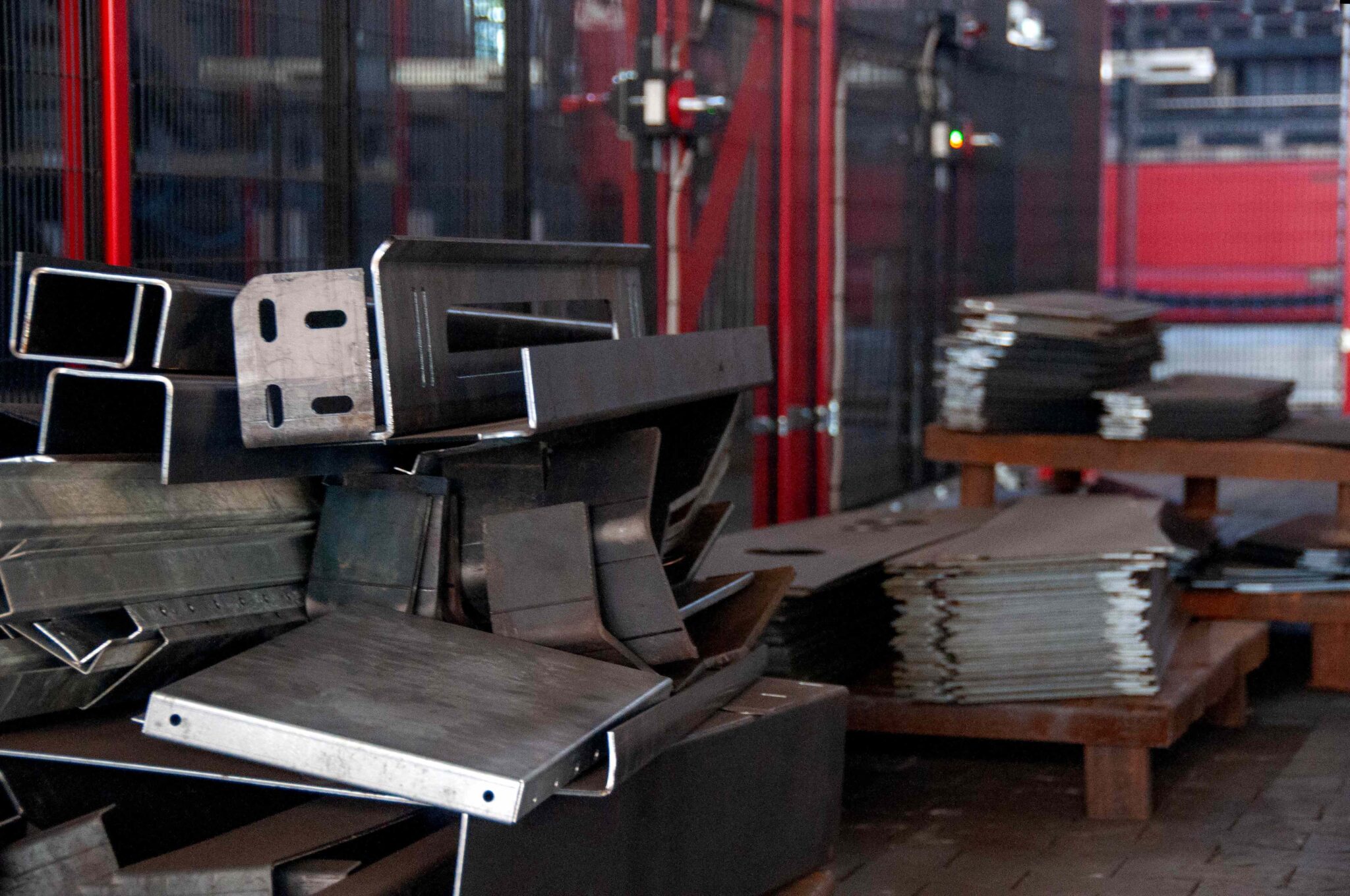
Bending of structural components.
As promised, we are presenting the next stage in the production of the TYTAN MT front loader.
This time, bending structural components.

The high-quality, precision bending of steel structural components for Metal-Technik front-end loaders using an Amada HFE robot is a key process in the manufacture of these machines. Amada HFE robots are advanced bending machines that deliver exceptional precision, repeatability and efficiency in metalworking.
Here’s how the process works:
1. Selecting the right tools and setting the parameters
The Amada HFE robot is equipped with advanced CNC control systems that allow for the precise setting of bending parameters. The operator enters technical specifications into the system, such as:
• the thickness and type of steel,
• dimensions of the components,
• bending angle,
• the force of pressure.
2. Preparation of the material
Steel components are carefully prepared prior to the bending process. They are cut to the correct dimensions and inspected for quality and material integrity to ensure they meet the technical requirements.
3. The bending process
The bending process itself takes place in several stages:
• Material positioning: The steel component is precisely positioned on the robot table, which is equipped with positioning systems and grabs to ensure the material remains stable during bending.
• Bending process: The Amada HFE robot performs the bending operation by moving the punch downwards onto the material resting on the die. Precise control over the speed, force and angle of bending is crucial for achieving accurate and repeatable results.
• Quality control: After each bend, the component is checked to ensure it complies with the specified dimensions and bend angle. Thanks to advanced sensors and cameras, the Amada HFE robot can automatically correct minor deviations in real time.

4. Repeatability and efficiency
Amada HFE robots are capable of operating in continuous mode, which boosts production efficiency. Their advanced systems enable:
• the automation of repetitive tasks: thereby eliminating human error,
• speed and precision: which speed up the entire production process, minimising downtime,
• improved production quality: thanks to continuous monitoring of bending parameters and automatic adjustments.
5. Completion of the process
Once the bending process is complete, the finished components are removed from the robot table and sent on to further stages of production, such as welding, assembly or painting. Quality control at every stage ensures that the final product meets the highest quality standards.

High-quality bending using the Amada HFE robot enables Metal-Technik to produce robust and precision-engineered structural components for front-end loaders, which are reliable and meet all technical requirements.
As you can see, this is a very precise stage of production.
A professional team of specialists, using extremely precise robots, ensures the quality of the finished product.
This collaboration ensures the highest quality of the finished product, which we can enjoy on the farm.


to be continued…
The next stage – welding.