



Stages in the production of a front-end loader – part 3 (welding).
Welding.
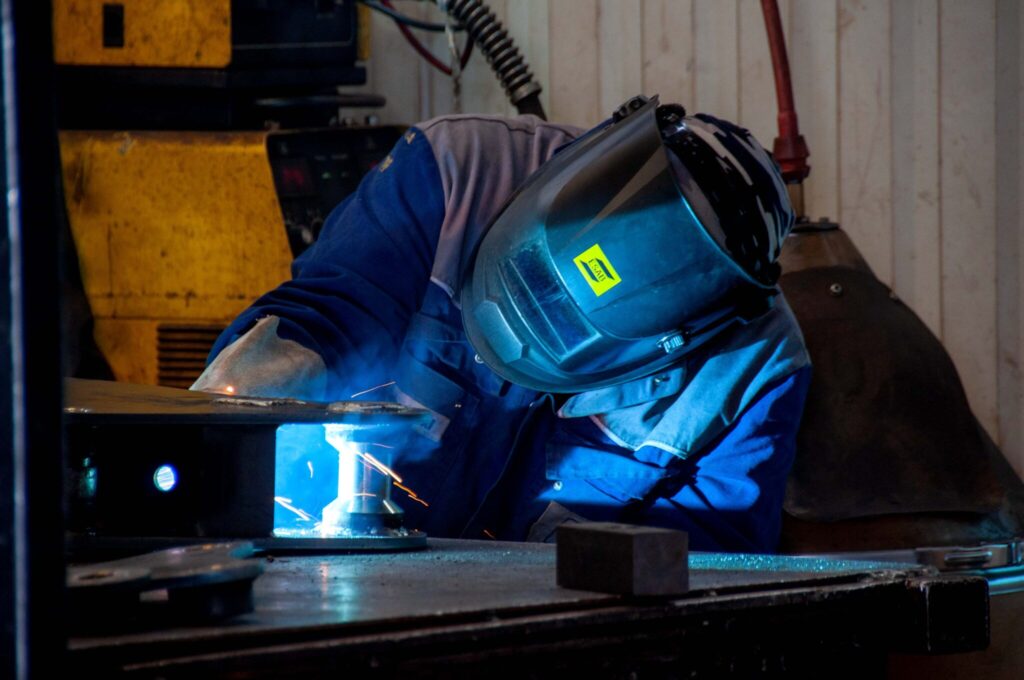
The most spectacular and one of the most interesting stages in the production of the Metal-Technik TYTAN MT front loader.
Welding is an extremely complex and labour-intensive process. The quality and durability of the entire loader’s structure depend on it.
The welding process for the structural components of the Metal-Technik front loader comprises several key stages that are essential to ensuring the strength and durability of the structure.
A general description of this process is set out below:
1. Preparation of materials
Before welding begins, all structural components are carefully prepared.
This includes:
• cutting of materials: steel sheets and other components are cut to the required dimensions using saws, lasers or plasma cutters,
• Surface cleaning: the surfaces to be welded must be free from contaminants such as oil, rust or paint. Cleaning is carried out mechanically (e.g. with wire brushes) or chemically.
2. Assembly and fixing
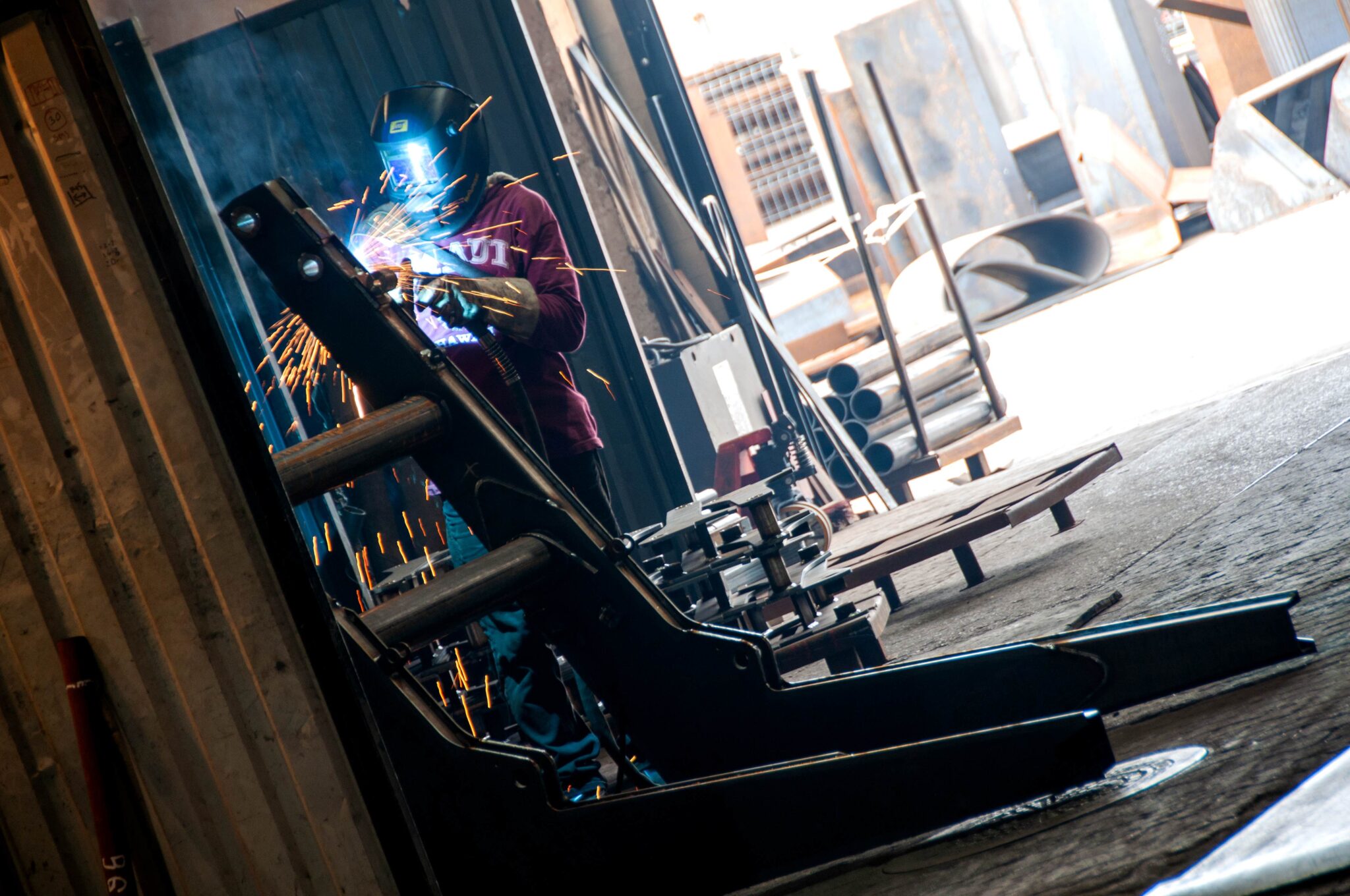
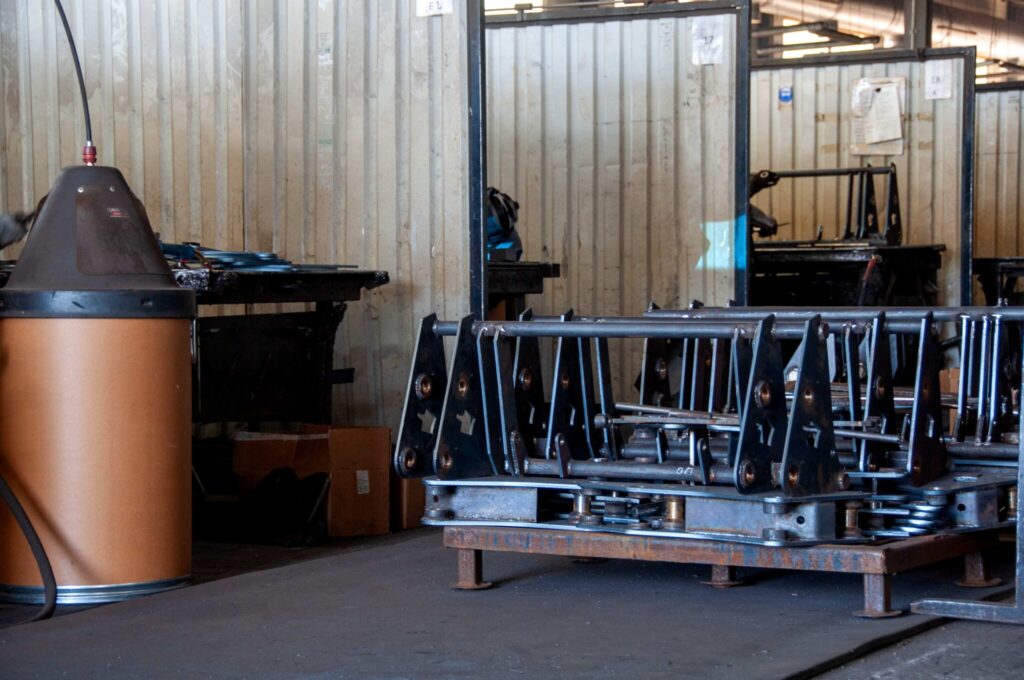
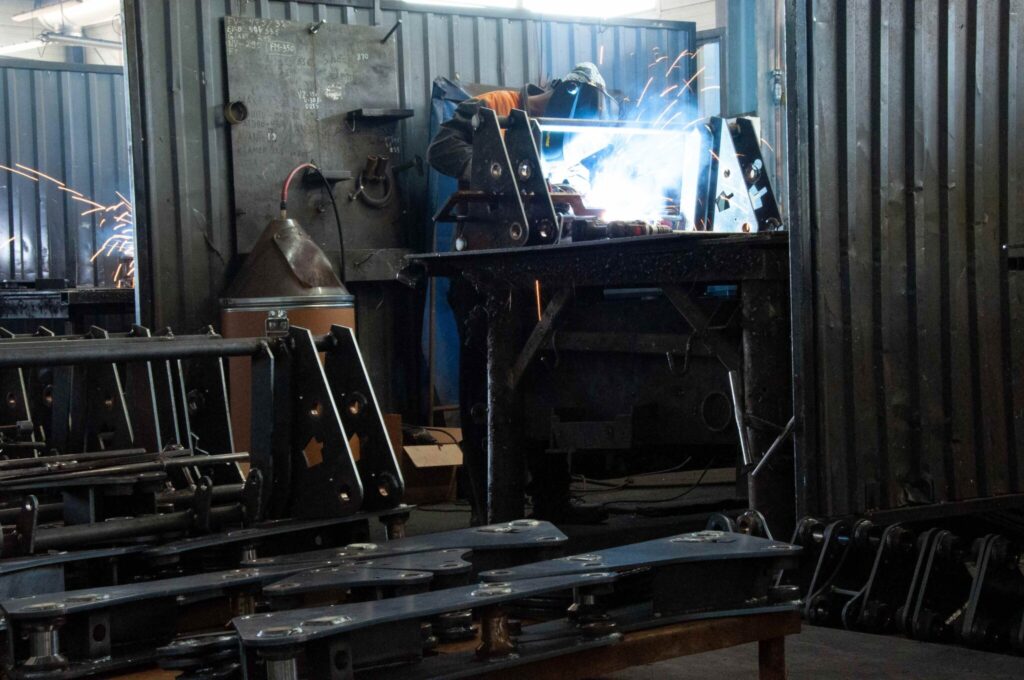
Components intended for welding are assembled and secured in the correct positions. The accurate positioning and securing of the components is crucial for achieving precise welds. Various types of clamps, vices and assembly tables are used for this purpose.
3. Choosing a welding method
The appropriate welding method is selected depending on the structural and material requirements.
The most commonly used methods are:
• MIG/MAG (Metal Inert Gas/Metal Active Gas) welding: popular due to its high efficiency and the quality of the welds,
• TIG (Tungsten Inert Gas) welding: used where high-quality, precise welds are required,
• manual metal arc welding (MMA): a method often used in more challenging conditions or for thicker materials.
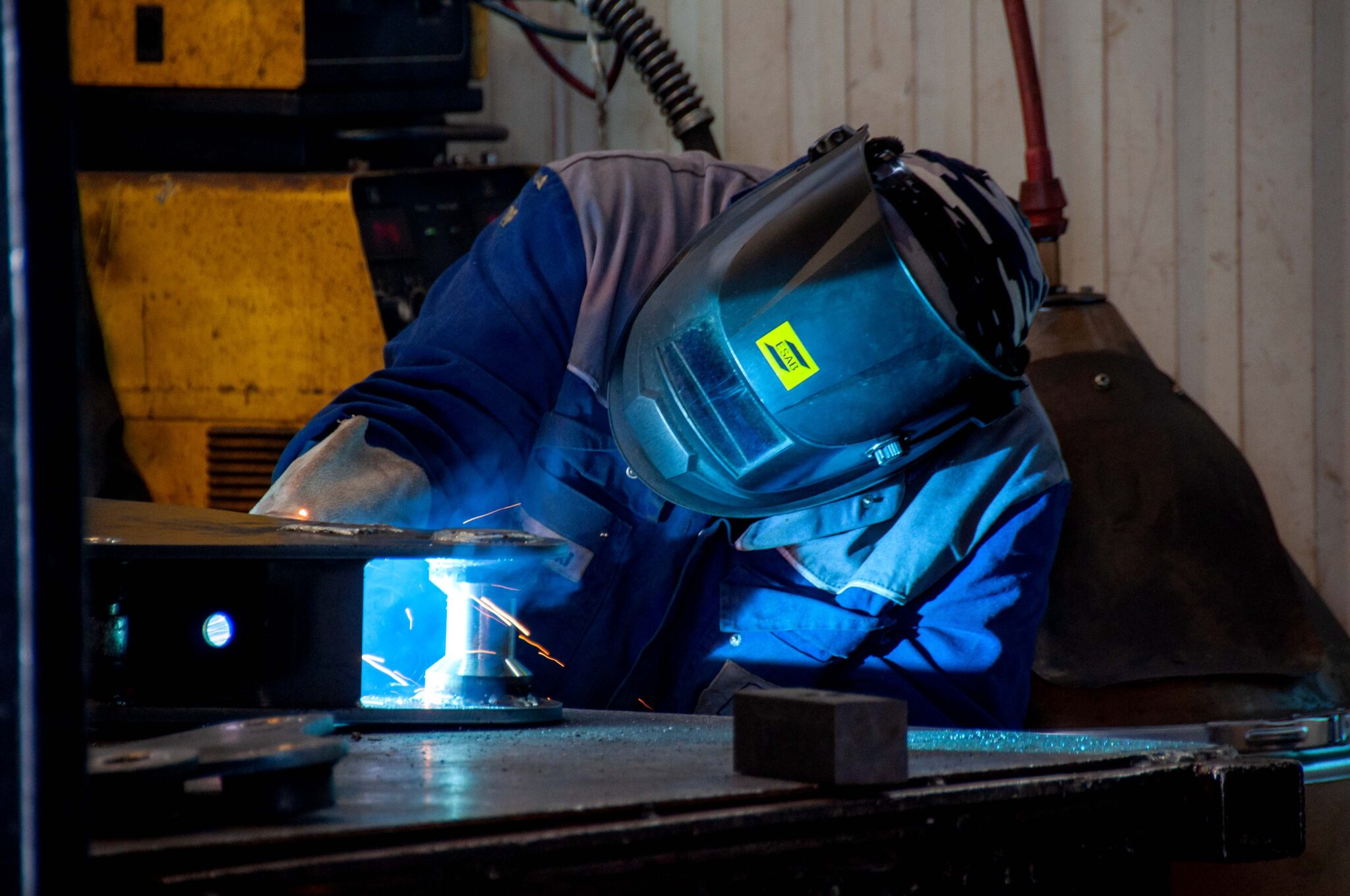
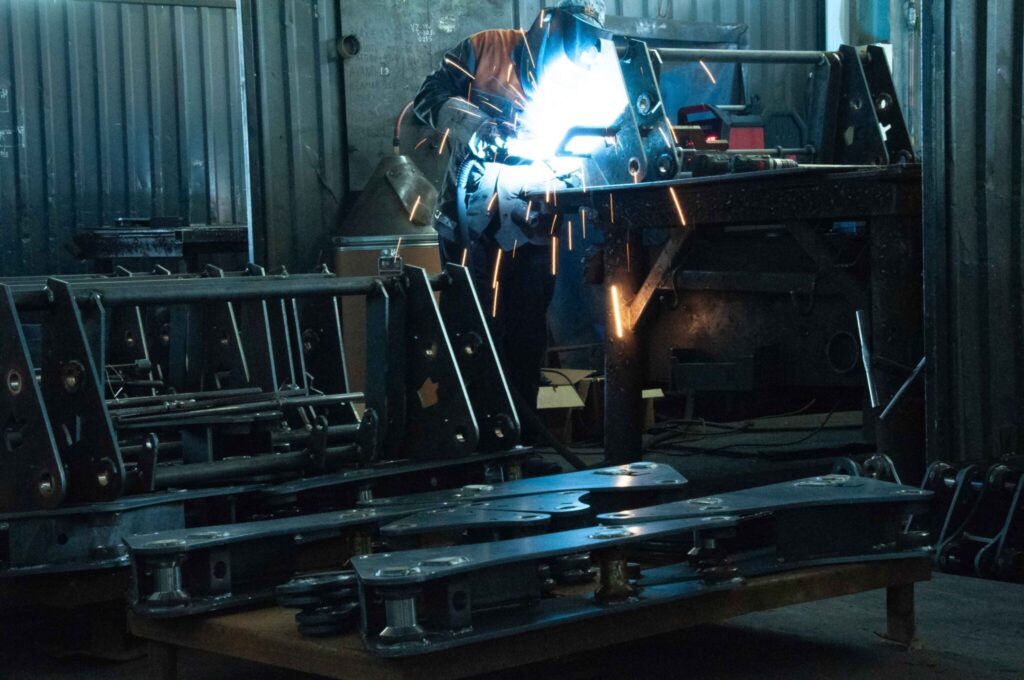
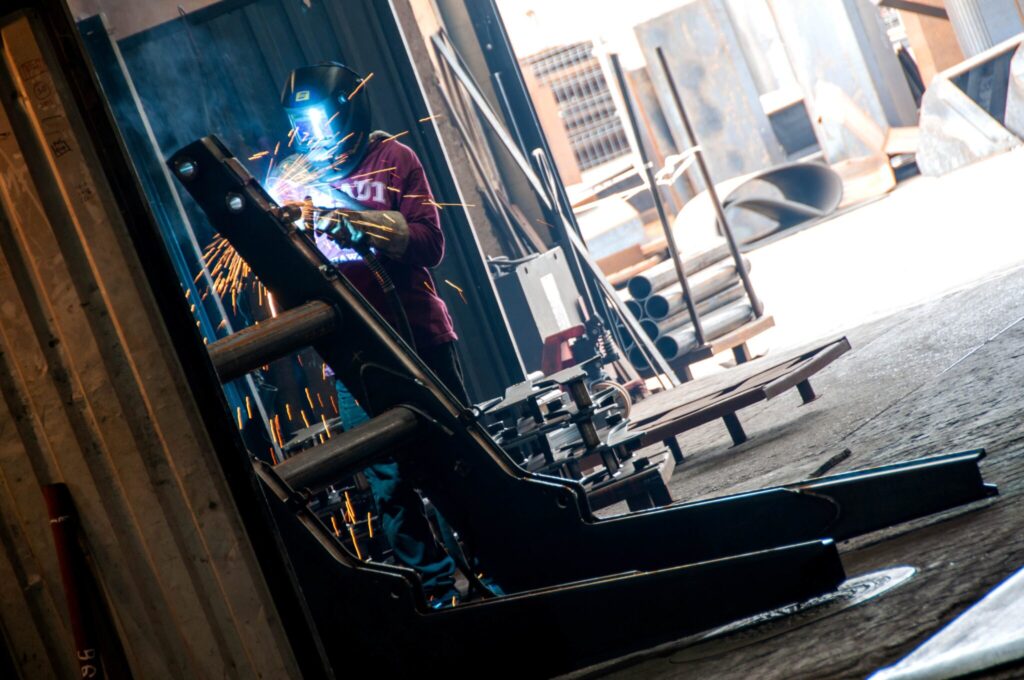
4. Welding
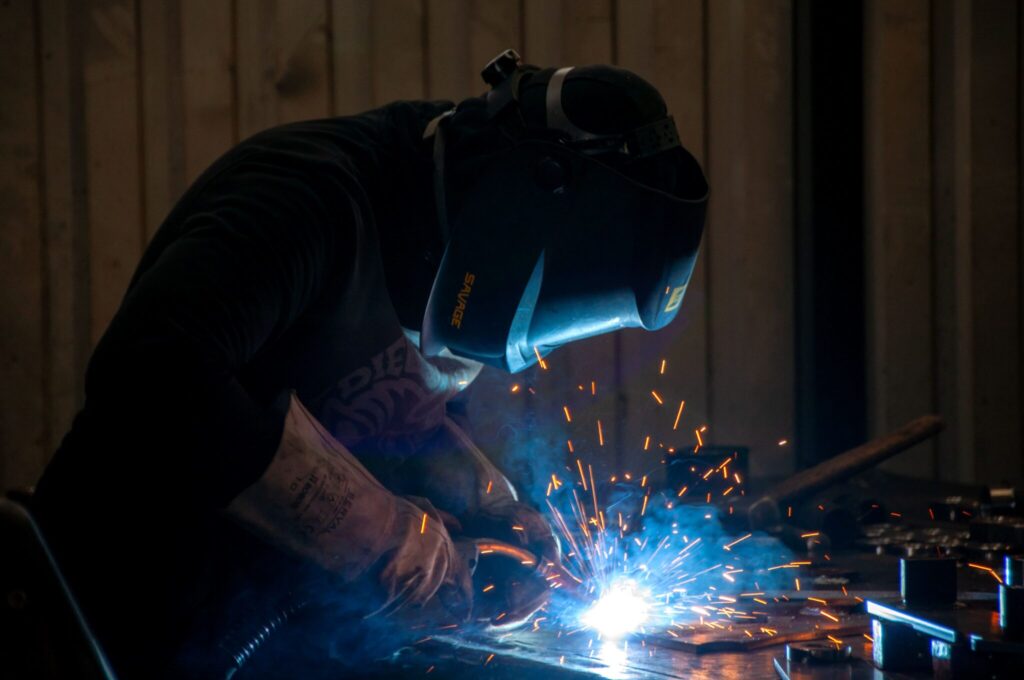
Welding is carried out in accordance with a pre-determined plan. It is important that the welder is fully qualified and holds the relevant certificates.
The welding process involves:
• Setting the welding parameters: The correct speed, current and voltage.
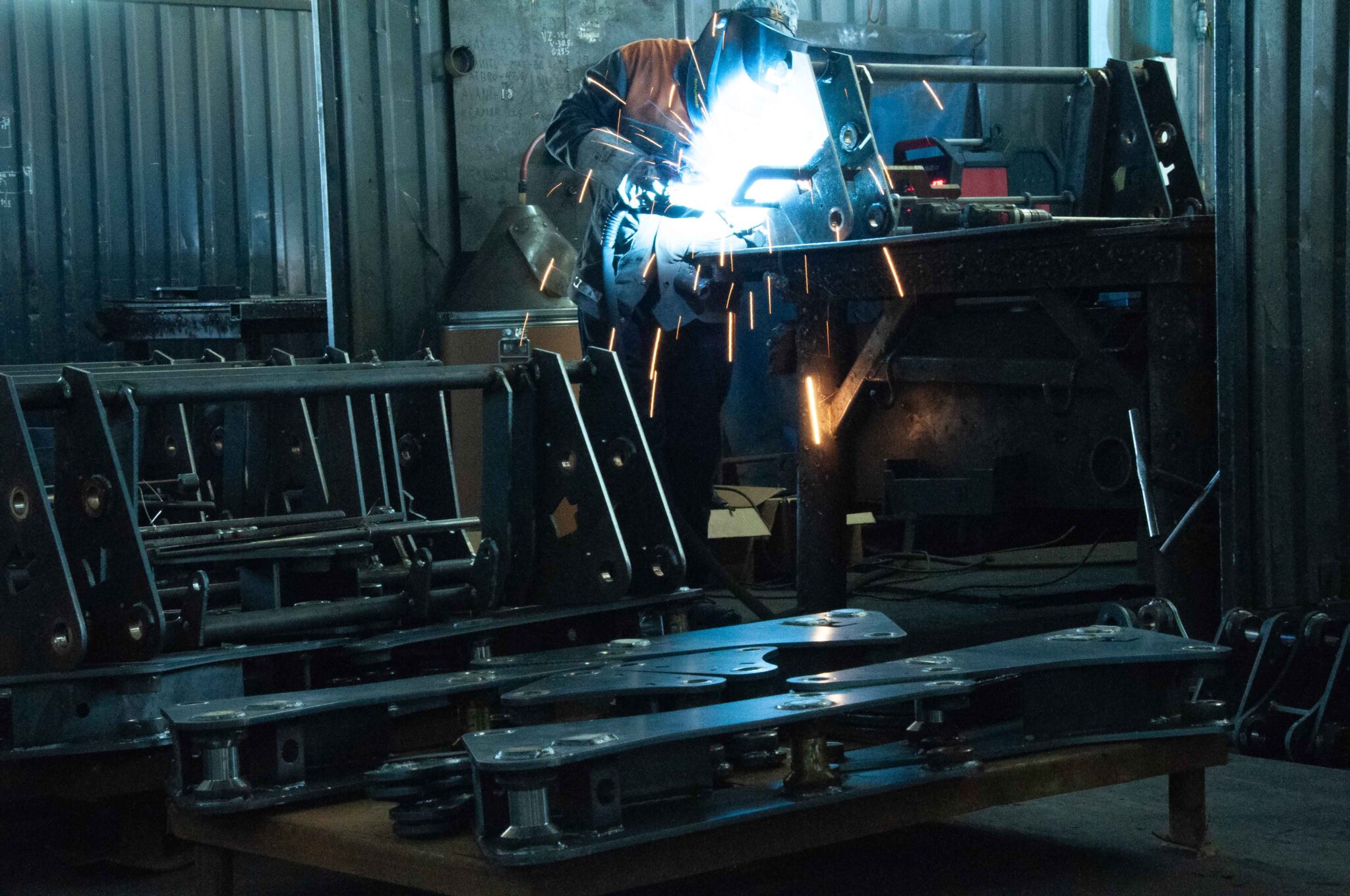
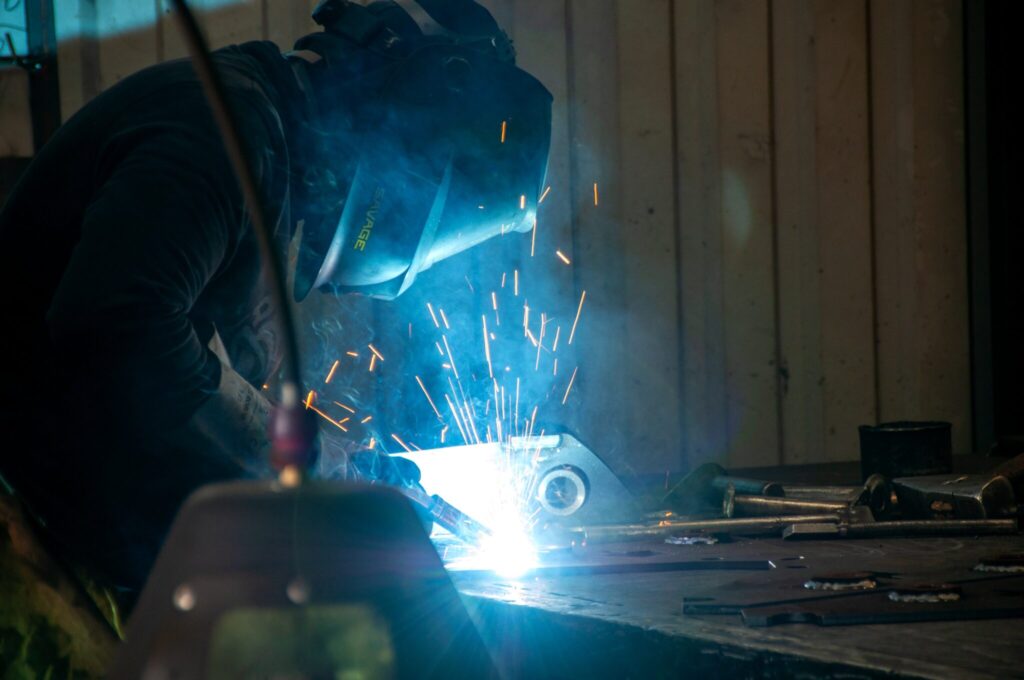
• Welding: The welder carries out the welds in accordance with the technical documentation, ensuring that the correct sequence and direction of welding are followed.
5. Quality control of welds
Once welding is complete, each weld is thoroughly inspected for any defects.
Quality control may include:
• visual inspection: checking the appearance of the joints for cracks, pores or discontinuities,
• non-destructive testing (NDT): ultrasonic testing, radiography, dye penetration testing or magnetic testing, depending on requirements.
6. Final finishing
Once the quality of the welds has been approved, the components may undergo further processing, such as:
• sanding: removing excess material and smoothing the surface,
• painting or protective coatings: protecting welded components against corrosion.
The welding process for the structural components of the Metal-Technik front loader is a complex one and requires precision at every stage to ensure that the final product is robust and safe to use.
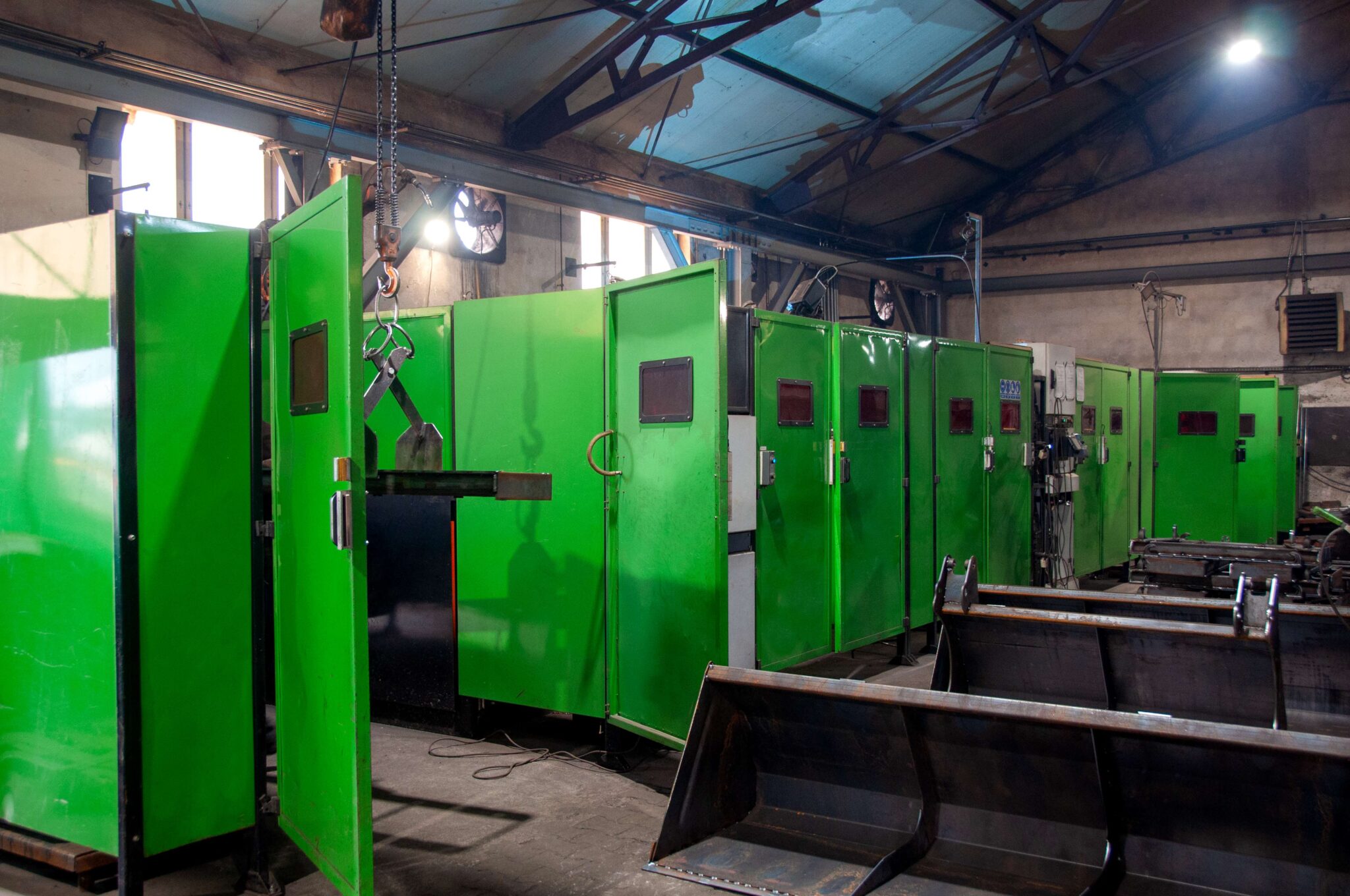
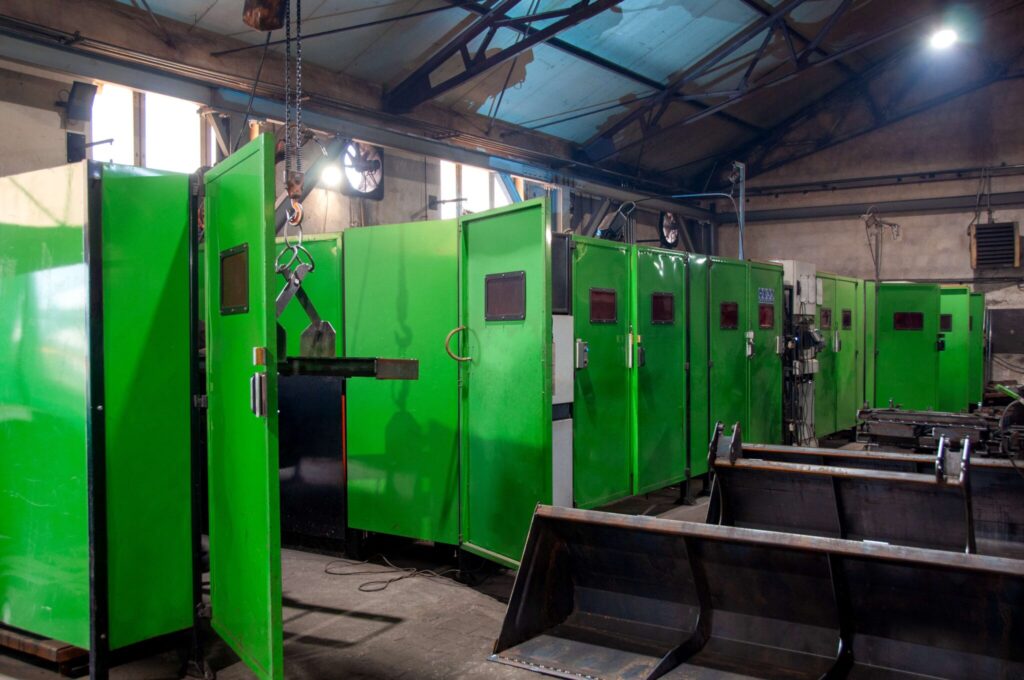
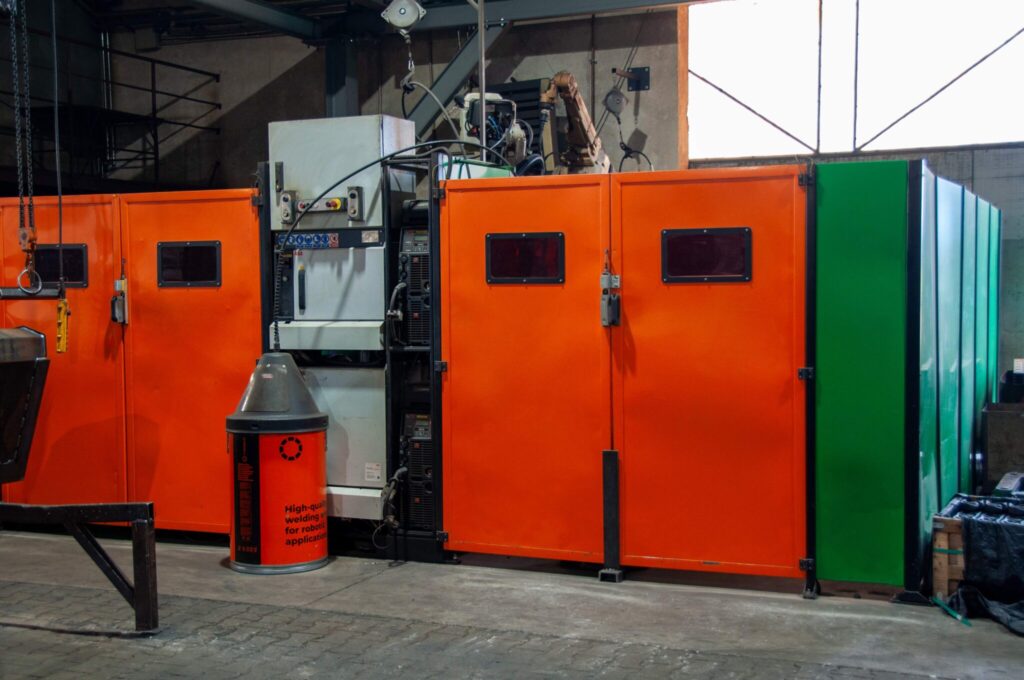
At Metal-Technik, we utilise, amongst other things, precision welding carried out by welding robots. This ensures high quality and repeatability of welds, which translates into the durability and reliability of the structures. The automated welding process increases production efficiency, reducing production time and minimising the risk of human error. Furthermore, robotisation enables the precise execution of complex welds, which improves the aesthetics and strength of the finished product.
to be continued…